
Grand Circle Japan Cherry Blossoms
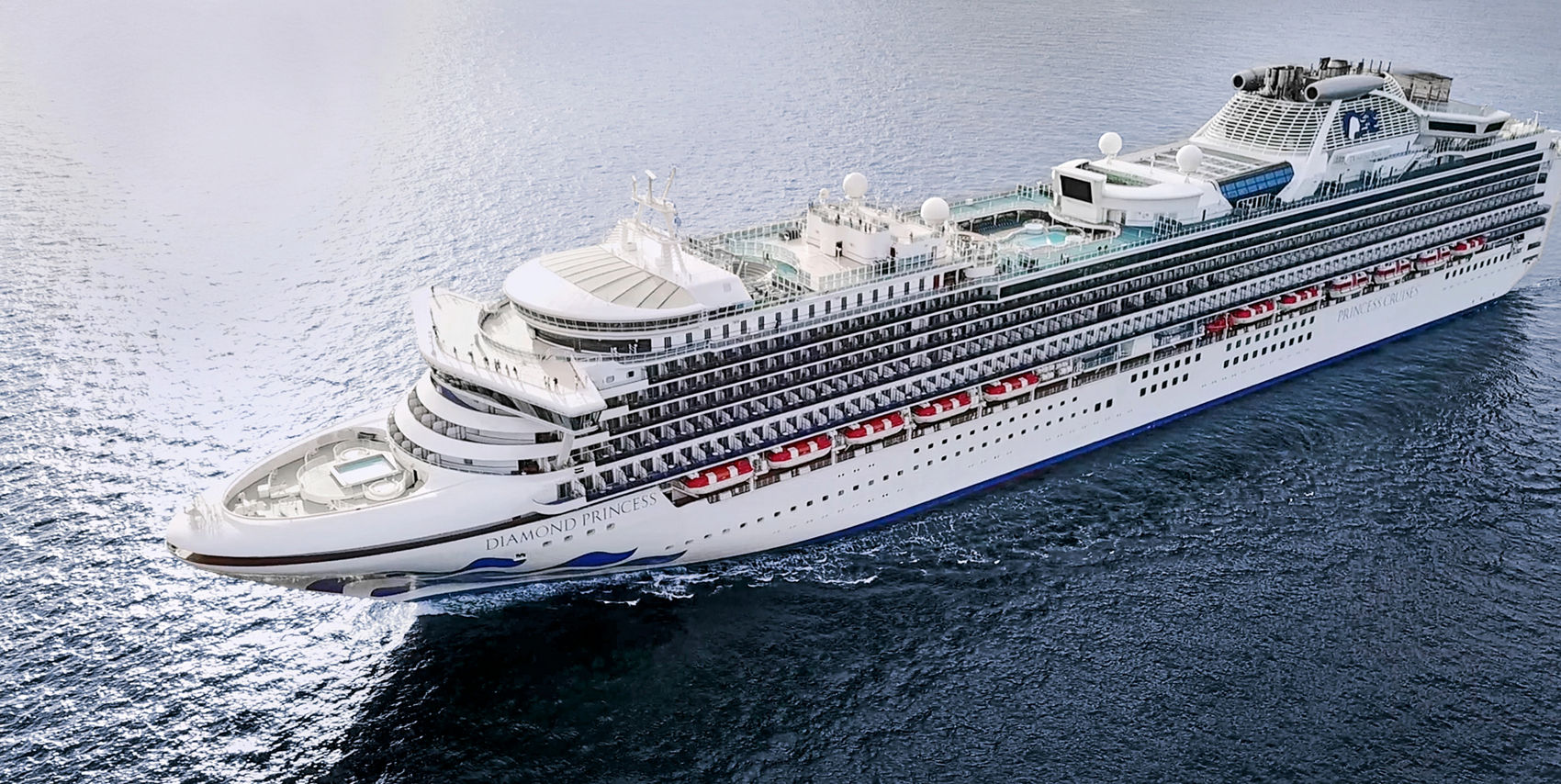
21-night Japan cruise from Tokyo (Yokohama), Japan to Tokyo (Yokohama), Japan aboard Diamond Princess
- 08 Apr 2027 – 29 Apr 2027
from $5,668.58 pp twin share *
Additional Pricing Information
- Interior from $5,668.58 pp twin share
- Balcony from $9,588.58 pp twin share
- Mini-Suite from $11,818.58 pp twin share
* Prices and category availability are subject to change without notice.
Itinerary
Day 1 – Tokyo (Yokohama), Japan
Departs 03:00 pm.
Yokohama and Edo began life as sleepy fishing villages. That changed in the early 17th century after Tokugawa Ieyasu became Shogun. Edo became the center of political power in Japan, a position the city retained even after the restoration of Imperial rule in 1866.Contemporary Tokyo may be the most astonishing city on earth. It’s a paradoxical mix of ancient tradition and postmodern culture. The Ginza – an international shopping mecca – stands near the serene grounds of the Imperial Palace, and the hyper-speed of 21st century consumerism is mysteriously reconciled with the elegance and serenity of traditional culture. Tokyo provides the traveler with a dizzying experience.With the Meiji Restoration of 1868, Edo was renamed Tokyo, the “Eastern Capital,” to distinguish it from the old imperial capital at Kyoto, the “Western Capital.”
Day 2 – Toba, Japan
Arrives 07:00 am, departs 04:00 pm.
Toba, located at the northeastern end of the Shima-hanto Peninsula in Mie, flourished as the castle town of the Kuki family who ruled this region from the 16th century. It was also a landing spot for visitors on the sea route to Ise-jingu Shrine and belongs to Ise-Shima National Park.
Day 3 – At Sea
Day 4 – Nagasaki, Japan
Arrives 08:00 am, departs 05:00 pm.
For most travelers, Nagasaki is a symbol of the horror and the inhumanity of war. An estimated 75,000 people perished in 1945 when the city became the second target of a nuclear attack. Today, Nagasaki’s Peace Park and Atomic Bomb Museum draw visitors from around the world.But this beautiful city on Kyushu offers other sights. Often described as the San Francisco of Japan, the city occupies verdant hills surrounded by a deep-water bay. For three centuries, Nagasaki was Japan’s sole window on the world. The city is also celebrated as the setting for Puccini’s opera “Madame Butterfly.”
Day 5 – Busan, South Korea
Arrives 07:00 am, departs 04:00 pm.
The second largest city in South Korea, Busan is your gateway to a fascinating land whose culture is a unique amalgam of old and new. Modern high-rise towers dwarf ancient Buddhist temples. The city’s bustling business district offers a stark contrast to the serene grounds of Yongdusan Park. In short, Busan is a microcosm of South Korea, a nation whose startling economic success often obscures one of Asia’s most sophisticated and venerable cultures.Busan was the scene of bitter fighting during the Korean War. The United Nations Memorial Cemetery marks the final resting place for the troops from 16 nations who gave their lives during the conflict.
Day 6 – Sakaiminato, Japan
Arrives 07:00 am, departs 05:00 pm.
Wedged between sea, sky and mountains, this small fishing port has been esteemed for centuries for its superb seafood. Here, the Sea of Japan yields up both crab and hon-maguro, the prized Bluefin tuna esteemed by gourmets around the world. Sakaiminato is also your gateway to a very ancient region of Honshu. West of the city lies Izumo-taisha, one of the oldest and holiest shrines in Shinto. This area is dotted with burial mounds from Japan’s Bronze Age. The town of Matsue boasts the celebrated “Black Castle,” a six-story, black-walled castle that home to a clan of the mighty Tokugawa dynasty that ruled Japan for over 250 years. And to the east rises the great snow-capped summit of Mt. Daisen, considered one of the four most scenic mountains in all Japan.Also a common sight ashore are the Yokai – approximately 100 bronze statues of supernatural characters as imagined by famed manga comic author Shigeru Mizuki, who was born in Sakaiminato. The Yokai have become synonymous with the town and delight visitors at every turn.
Day 7
Arrives 07:00 am, departs 07:00 pm.
Day 8 – Toyama (Fushiki), Japan
Arrives 10:00 am, departs 06:00 pm.
Located in the heart of coastal Japan, Toyama welcomes visitors with dramatic scenery, colorful crafts and engaging local sites. Gateway to the world-famous Tateyama Kurobe Alpine Route in the Northern Japan Alps. The Tateyama mountains of 3,000m and the Toyama Bay of 1,000 deep makes for 4,000m of height difference helps to grow agriculture with the pure mountain waters and fresh seafood such as glass shrimp, firefly squid, red snow crab, and yellowtail from Toyama Bay. Popular attractions include the Zuiryuji Temple of elegant architecture, trolley train into the Kurobe Gorge, the UNESCO World Heritage Gokayama Villages. Looking for something out of the ordinary? Go to Nosaku where you can make your own sake cup out of tin with the original craft casting method. Afterwards, take your cup to the Wakatsuru Sake and Whiskey distillery and have a taste of the Toyama original beverage. Toyama has so much to offer to fulfill your touring expectations.
Day 9
Arrives 08:00 am, departs 05:00 pm.
Day 10 – Hakodate, Japan
Arrives 07:00 am, departs 05:00 pm.
It took Commodore Perry and American gunboat diplomacy to open Japan to the outside world after two centuries of self-imposed isolation. In 1859, the port of Hakodate became the first Japanese city fully opened to Westerners under the Treaty of Amity and Commerce. Foreigners soon flocked to Hakodate, and today visitors wandering the cobblestone streets of the city’s Motomachi District can view their Western-style frame houses. Hakodate, once a fishing port famed for its high quality fish and shellfish, quickly became Hokkaido’s largest city and one of Japan’s most important ports. The Great Hakodate Fire of 1934 dealt the city a near fatal blow – a blow from which Hakodate was slow to recover. Today the city is Hokkaido’s third largest – surpassed by Sapporo and Asahikawa – but retains its foremost position as the finest Japanese producer of sushi’s raw product: the high quality seafood caught in Hokkaido’s cold waters.It may not compare to Tokyo’s Tsukiji’s Fish Market, but at Hakodate’s four-block-long Morning Market, vendors offer a stunning array of fresh fish and shellfish prized for sushi including salmon roe, sea urchin, scallops and crab. Restaurants and food stands prepare a wide arrange of dishes including domburi topped with fresh seafood.
Day 11
Arrives 07:00 am, departs 04:00 pm.
Day 12 – Hitachinaka (for Nikko), Japan
Arrives 08:00 am, departs 05:00 pm.
Extending from the Naka River to the Pacific Ocean, Hitachinaka offers pristine beaches, stellar views, and a charming mix of old and new attractions. Hitachinaka is steeped in traditional history which shines in such sites as the oceanside Oarai Isosaki-jinja Shrine, and the Kasama Inari Shrine, one of the most famous Inari shrines in the country. Gaze upon Hitachinaka’s nature’s wonders from the lookout point of the bronze Ushiku Buddha, one of the tallest Buddha statues in the world, and if flowers are your passion, you simply can’t miss Kairakuen Gardens, one of the “Three Great Gardens” in Japan, and Hitachi Seaside Park, which blooms with wildflowers, including the bright Kochia ball blooms and the delicate, baby-blue Nemophila. The color blue remains a theme at Aqua World Ibaraki Prefectural Oarai Aquarium, where huge tanks house over 68,000 sea creatures. For those looking to delve into Hitachinaka artistic heritage, the Tokugawa Art Museum displays almost 30,000 artifacts of the Mito Tokugawa family, offering a detailed glimpse into the lives of Japan’s daimyo feudal lords. And when hunger strikes, the stalls of Nakaminato Fish Market brim with the “fruits of the sea,” and restaurants serve the freshest sushi and local delicacies in town.
Day 13 – Tokyo (Yokohama), Japan
Arrives 06:30 am, departs 03:00 pm.
Yokohama and Edo began life as sleepy fishing villages. That changed in the early 17th century after Tokugawa Ieyasu became Shogun. Edo became the center of political power in Japan, a position the city retained even after the restoration of Imperial rule in 1866.Contemporary Tokyo may be the most astonishing city on earth. It’s a paradoxical mix of ancient tradition and postmodern culture. The Ginza – an international shopping mecca – stands near the serene grounds of the Imperial Palace, and the hyper-speed of 21st century consumerism is mysteriously reconciled with the elegance and serenity of traditional culture. Tokyo provides the traveler with a dizzying experience.With the Meiji Restoration of 1868, Edo was renamed Tokyo, the “Eastern Capital,” to distinguish it from the old imperial capital at Kyoto, the “Western Capital.”
Day 14 – At Sea
Day 15 – Aomori, Japan
Arrives 08:00 am, departs 08:00 pm.
The capital of the Aomori Prefecture in northern Japan, Aomori derives much of its beauty from the apple orchards and cherry blossoms that encompass its landscape and the snow-covered Hakkoda Mountains that look on from a distance. Throughout its history, the city has been stricken with misfortune time and time again – in 1910, a fire destroyed Aomori, and during World War II, the city was left in ruins following an air raid – yet it always prevails.Aomori is perhaps best known for its renowned Nebuta Festival, an elaborate yearly event in which participants illuminate giant paper representations of samurai warriors, animals, and popular cartoon characters while parading them through the streets.
Day 16 – Muroran, Japan
Arrives 07:00 am, departs 07:00 pm.
Travelers familiar with Honshu and Kyushu will find the island of Hokkaido a welcome contrast. Relatively unspoiled, Hokkaido offers dramatic landscapes ranging from dense forests and hot springs to active volcanoes and serene lakes nestled in calderas. To travelers familiar with the thronged streets of Osaka, Kyoto and Tokyo, Hokkaido presents a soothing change of pace.Sapporo was a reflection of the “new” Japan of the Meiji Restoration. The city received international attention when it hosted the 1972 Winter Olympic Games.
Day 17 – Hakodate, Japan
Arrives 07:00 am, departs 04:00 pm.
It took Commodore Perry and American gunboat diplomacy to open Japan to the outside world after two centuries of self-imposed isolation. In 1859, the port of Hakodate became the first Japanese city fully opened to Westerners under the Treaty of Amity and Commerce. Foreigners soon flocked to Hakodate, and today visitors wandering the cobblestone streets of the city’s Motomachi District can view their Western-style frame houses. Hakodate, once a fishing port famed for its high quality fish and shellfish, quickly became Hokkaido’s largest city and one of Japan’s most important ports. The Great Hakodate Fire of 1934 dealt the city a near fatal blow – a blow from which Hakodate was slow to recover. Today the city is Hokkaido’s third largest – surpassed by Sapporo and Asahikawa – but retains its foremost position as the finest Japanese producer of sushi’s raw product: the high quality seafood caught in Hokkaido’s cold waters.It may not compare to Tokyo’s Tsukiji’s Fish Market, but at Hakodate’s four-block-long Morning Market, vendors offer a stunning array of fresh fish and shellfish prized for sushi including salmon roe, sea urchin, scallops and crab. Restaurants and food stands prepare a wide arrange of dishes including domburi topped with fresh seafood.
Day 18 – At Sea
Day 19 – Busan, South Korea
Arrives 07:00 am, departs 04:00 pm.
The second largest city in South Korea, Busan is your gateway to a fascinating land whose culture is a unique amalgam of old and new. Modern high-rise towers dwarf ancient Buddhist temples. The city’s bustling business district offers a stark contrast to the serene grounds of Yongdusan Park. In short, Busan is a microcosm of South Korea, a nation whose startling economic success often obscures one of Asia’s most sophisticated and venerable cultures.Busan was the scene of bitter fighting during the Korean War. The United Nations Memorial Cemetery marks the final resting place for the troops from 16 nations who gave their lives during the conflict.
Day 20 – Nagasaki, Japan
Arrives 07:00 am, departs 04:00 pm.
For most travelers, Nagasaki is a symbol of the horror and the inhumanity of war. An estimated 75,000 people perished in 1945 when the city became the second target of a nuclear attack. Today, Nagasaki’s Peace Park and Atomic Bomb Museum draw visitors from around the world.But this beautiful city on Kyushu offers other sights. Often described as the San Francisco of Japan, the city occupies verdant hills surrounded by a deep-water bay. For three centuries, Nagasaki was Japan’s sole window on the world. The city is also celebrated as the setting for Puccini’s opera “Madame Butterfly.”
Day 21 – At Sea
Day 22 – Tokyo (Yokohama), Japan
Arrives 06:30 am.
Yokohama and Edo began life as sleepy fishing villages. That changed in the early 17th century after Tokugawa Ieyasu became Shogun. Edo became the center of political power in Japan, a position the city retained even after the restoration of Imperial rule in 1866.Contemporary Tokyo may be the most astonishing city on earth. It’s a paradoxical mix of ancient tradition and postmodern culture. The Ginza – an international shopping mecca – stands near the serene grounds of the Imperial Palace, and the hyper-speed of 21st century consumerism is mysteriously reconciled with the elegance and serenity of traditional culture. Tokyo provides the traveler with a dizzying experience.With the Meiji Restoration of 1868, Edo was renamed Tokyo, the “Eastern Capital,” to distinguish it from the old imperial capital at Kyoto, the “Western Capital.”
Highlights
- Sail aboard the Diamond Princess with MedallionClass experience
- Enjoy multicourse dining and Broadway-style entertainment onboard
- Access fitness facilities, youth and teen clubs during your journey
21-night Japan cruise from Tokyo (Yokohama), Japan to Tokyo (Yokohama), Japan aboard Diamond Princess
Inclusions
- MedallionClass® experience
- Broadway-style entertainment
- Multicourse dining and casual venues
- Fitness facilities
- Youth and teen clubs (ages 3–17)
FAQs
How long is this journey?
This itinerary runs for 22 days and 21 nights.
When can I travel?
Departures are currently scheduled between 08 Apr 2027 and 29 Apr 2027, subject to live availability.
What is generally included?
Inclusions typically cover guided touring and selected experiences, with exact details listed in the itinerary.
Provided by: Princess CruisesFine Print
Terms and conditions apply. Click here for more details.
Enquire Now
Speak with our travel experts and get your personalised quote.