
43-day World cruise: Indian ocean & Atlantic islands
43-night World Cruise from Victoria, Mahe, Seychelles to Lisbon, Portugal aboard Seabourn Quest.
Calling at Praslin, Zanzibar, Antsiranana, Port Louis, La Possession, Cape Town, Luderitz, Walvis Bay, Jamestown, Dakar, Mindelo, Gran Canaria, Lanzarote, Madeira and Lisbon, with 24 days at sea. 16 ports of call across Seychelles, Tanzania, Madagascar, Mauritius, Reunion, South Africa, Namibia, Ascension & Tristan Da Cunha, Senegal, Cape Verde Islands, Canary Islands and Portugal.
Seabourn Quest is an all-suite Seabourn ship: every suite is ocean-front, and premium spirits, fine wines, dining in every venue and gratuities are included in the fare.
Suite categories range from Ocean View Suite to Veranda Suite.
- 13 Apr 2029 – 26 May 2029
from $34,599 pp twin share *
Additional Pricing Information
- Ocean View Suite from $34,599 pp twin share
- Veranda Suite from $43,299 pp twin share
* Prices and category availability are subject to change without notice.
Itinerary
Day 1 – Victoria, Mahe, Seychelles
Departs 11:00 pm.
Day 2 – Praslin, Seychelles
Arrives 08:00 am, departs 05:00 pm.
Day 3 – At Sea
Day 4 – At Sea
Day 5 – Zanzibar, Tanzania
Arrives 03:00 pm.
Day 6 – Zanzibar, Tanzania
Departs 05:00 pm.
Day 7 – At Sea
Day 8 – At Sea
Day 9 – Antsiranana, Madagascar
Arrives 08:00 am, departs 06:00 pm.
Day 10 – At Sea
Day 11 – At Sea
Day 12 – Port Louis, Mauritius
Arrives 08:00 am, departs 06:00 pm.
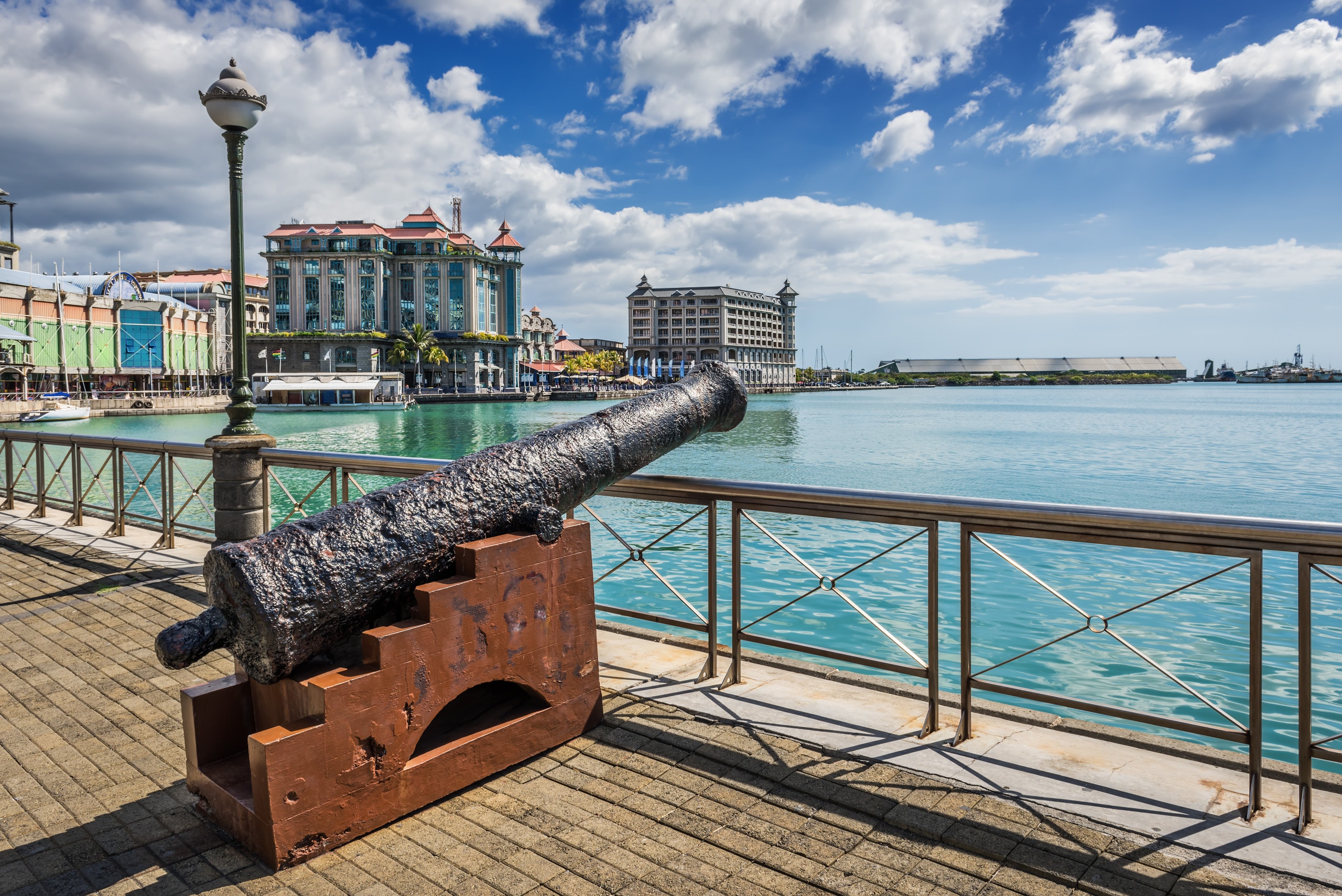
Port Louis is the capital of the island of Mauritius. A volcanic island situated in the Indian Ocean east of Madagascar, Mauritius is lush and beautiful, with lovely mountain ranges, fine beaches, stunning coral reefs and picturesque villages.Mauritius amazingly remained uninhabited until the 16th century. Dutch, British and French traders came to the island, followed by slaves from Africa to work the plantations and then laborers from India. The flavor here remains predominantly French, as does the language, however, the present population is fifty percent Indian. Today, Mauritius is independent and the economy prospers due to exports of sugar and textiles, plus it caters to tourism.
Day 13 – La Possession, Reunion
Arrives 08:00 am, departs 05:00 pm.
Day 14 – At Sea
Day 15 – At Sea
Day 16 – At Sea
Day 17 – At Sea
Day 18 – At Sea
Day 19 – Cape Town, South Africa
Arrives 02:00 pm.
160 years after its discovery by Portugal’s Bartholomew Diaz in 1488, the Cape of Good Hope was still a part of primeval Africa. Sailors on passing ships impatient to reach the East or return home to Europe would leave messages under inscribed “post office” stones for other ships to carry forward. In 1580, Sir Francis Drake sailed around the Cape. The ruggedness and breathtaking beauty of the peninsula caused him to write, “This Cape is a most stately thing, and the fairest Cape in the whole circumference of the earth.” The Dutch East India Company, yielding to repeated petitions and recommendations from their ships’ officers, decided to establish a post at Table Bay in 1652. A stronghold was established and subsequently was replaced by the existing Castle of Good Hope – Cape Town’s first building.Cape Town continued to grow quickly under Simon van der Stel, who arrived as Governor in 1679. He turned vast regions into rich farmland, planted some 8,000 trees and designed and built the stateliest of the Cape’s historic mansions, Groot Constantia (named after his wife, Constance). The British seized the Cape from Holland in 1806 and the subsequent discovery of diamonds and gold in the country spurred growth and immigration. Cape Town became a municipality in 1840 and a liberal constitution was granted to the Cape Colony in 1853. Today, the “Mother City” and the Western Cape are home to South Africa’s parliament for half of the year (Parliament sits in Pretoria for the other half of the year) and much of its major industry.
Day 20 – Cape Town, South Africa
160 years after its discovery by Portugal’s Bartholomew Diaz in 1488, the Cape of Good Hope was still a part of primeval Africa. Sailors on passing ships impatient to reach the East or return home to Europe would leave messages under inscribed “post office” stones for other ships to carry forward. In 1580, Sir Francis Drake sailed around the Cape. The ruggedness and breathtaking beauty of the peninsula caused him to write, “This Cape is a most stately thing, and the fairest Cape in the whole circumference of the earth.” The Dutch East India Company, yielding to repeated petitions and recommendations from their ships’ officers, decided to establish a post at Table Bay in 1652. A stronghold was established and subsequently was replaced by the existing Castle of Good Hope – Cape Town’s first building.Cape Town continued to grow quickly under Simon van der Stel, who arrived as Governor in 1679. He turned vast regions into rich farmland, planted some 8,000 trees and designed and built the stateliest of the Cape’s historic mansions, Groot Constantia (named after his wife, Constance). The British seized the Cape from Holland in 1806 and the subsequent discovery of diamonds and gold in the country spurred growth and immigration. Cape Town became a municipality in 1840 and a liberal constitution was granted to the Cape Colony in 1853. Today, the “Mother City” and the Western Cape are home to South Africa’s parliament for half of the year (Parliament sits in Pretoria for the other half of the year) and much of its major industry.
Day 21 – Cape Town, South Africa
Departs 05:00 pm.
160 years after its discovery by Portugal’s Bartholomew Diaz in 1488, the Cape of Good Hope was still a part of primeval Africa. Sailors on passing ships impatient to reach the East or return home to Europe would leave messages under inscribed “post office” stones for other ships to carry forward. In 1580, Sir Francis Drake sailed around the Cape. The ruggedness and breathtaking beauty of the peninsula caused him to write, “This Cape is a most stately thing, and the fairest Cape in the whole circumference of the earth.” The Dutch East India Company, yielding to repeated petitions and recommendations from their ships’ officers, decided to establish a post at Table Bay in 1652. A stronghold was established and subsequently was replaced by the existing Castle of Good Hope – Cape Town’s first building.Cape Town continued to grow quickly under Simon van der Stel, who arrived as Governor in 1679. He turned vast regions into rich farmland, planted some 8,000 trees and designed and built the stateliest of the Cape’s historic mansions, Groot Constantia (named after his wife, Constance). The British seized the Cape from Holland in 1806 and the subsequent discovery of diamonds and gold in the country spurred growth and immigration. Cape Town became a municipality in 1840 and a liberal constitution was granted to the Cape Colony in 1853. Today, the “Mother City” and the Western Cape are home to South Africa’s parliament for half of the year (Parliament sits in Pretoria for the other half of the year) and much of its major industry.
Day 22 – At Sea
Day 23 – Luderitz, Namibia
Arrives 07:00 am, departs 04:00 pm.
Day 24 – Walvis Bay, Namibia
Arrives 11:00 am, departs 07:00 pm.
Day 25 – At Sea
Day 26 – At Sea
Day 27 – At Sea
Day 28 – Jamestown, St Helena, Ascension & Tristan Da Cunha
Arrives 08:00 am, departs 05:00 pm.
Day 29 – At Sea
Day 30 – At Sea
Day 31 – Crossing the Equator
Day 32 – At Sea
Day 33 – At Sea
Day 34 – Dakar, Senegal
Arrives 08:00 am, departs 06:00 pm.
Day 35 – At Sea
Day 36 – Mindelo, Cape Verde Islands
Arrives 08:00 am, departs 06:00 pm.
The Cape Verde Islands lie off North Africa’s tropical coast. Their name literally means “green cape,” but nature has played a cruel trick on the archipelago. Changing climatic and economic conditions have left the archipelago ravaged by drought. But the islanders are a hardy and courageous lot. With foreign investment and private enterprise, the Cape Verde Islanders are slowly pursuing a new economic dream for their home and working toward a more promising future.Time spent in the Cape Verde Islands teaches a new appreciation of man’s endurance and resourcefulness.
Day 37 – At Sea
Day 38 – At Sea
Day 39 – Gran Canaria (Las Palmas), Canary Islands
Arrives 09:00 am, departs 11:00 pm.
The Canary archipelago was sculpted by a period of intense volcanic activity; its islands possess a stark, near lunar beauty. Gran Canaria is the third-largest island in the group and is often described as the ‘Round Island’ for its near-circular shape. Las Palmas, its capital, is also the largest city in the Canaries numbering some 500,000 inhabitants. Despite the seemingly inhospitable landscape, farmers in Gran Canaria’s Angostura Valley cultivate abundant crops of tomatoes, onions, melons, and figs. Moreover the island’s climates, lack of rainfall, and fine beaches have long drawn Europeans seeking the winter sun.
Day 40 – Lanzarote (Arrecife), Canary Islands
Arrives 09:00 am, departs 06:00 pm.
Lanzarote is the fourth-largest island in the Canary chain. The most easterly of the Canaries, the island lies some 70 miles off the shore of North Africa. Like its neighbours, Lanzarote was shaped by a period of intense volcanic activity. The resulting landscape possesses a stark, near-lunar beauty: Over 300 now-dormant volcanoes left behind petrified lava seas and deep layers of volcanic ash. Today, visitors to these “Mountains of Fire” ride camels through the lava beds and even enjoy a volcano-broiled steak at the park’s restaurant. (Subsurface temperatures still reach 800F in the park.) Despite the seemingly barren land scape, island farmers grow abundant crops of tomatoes, onions, melons, and figs in addition to Malvasia, a clear yellow wine produced from malmsey grapes. Lanzarote’s rugged landscape, its warm climate, its lack of rainfall, and its beaches have proved attracted to travellers: Tourism dominates the island economy with some 2 million visitors arriving annually.
Day 41 – At Sea
Day 42 – Madeira (Funchal), Portugal
Arrives 07:00 am, departs 06:00 pm.
The capital of Madeira is named after the fennel (funcha) that once flowered there in profusion. The largest island in the Madeira Archipelago was discovered in 1419 by Portuguese explorers venturing south into the Atlantic. The island is nearly equidistant from Lisbon and the African coast, and its unique geographical position allowed Madeira to play a pivotal role in European discovery. Seamen such as Christopher Columbus gained knowledge and experience plying the routes of the island’s sugar trade. When sugar declined, the island’s famed wines continued to provide a robust trade. By the late 18th century, Madeira’s mild climate, rocky peaks, and lush valleys provided a winter haven to Europe’s aristocrats. Visitors still flock to the island today, drawn by its scenery and its weather.Funchal is noted for its superb hand-embroidery and wicker ware, both Madeira specialties. The island, of course, is also noted for its superb wines: they are perhaps the world’s most complex and long lasting wines.
Day 43 – At Sea
Day 44 – Lisbon, Portugal
Arrives 07:00 am.
Draped across seven hills, Lisbon was once the center of a vast maritime empire that stretched from the west coast of Africa to the Spice Islands of the East Indies. Then, on November 1, 1755, a violent earthquake destroyed two-thirds of the city in the space of 10 minutes. Only the Alfama, the old Moorish quarter, survived. Today, Lisbon is a stately city of Neoclassical buildings and wide plazas.
Highlights
- Every suite is ocean-front, from Ocean View to Veranda
- Premium spirits and fine wines included in the fare
- All gratuities and dining in every venue included
43-night World Cruise from Victoria, Mahe, Seychelles to Lisbon, Portugal aboard Seabourn Quest.
Calling at Praslin, Zanzibar, Antsiranana, Port Louis, La Possession, Cape Town, Luderitz, Walvis Bay, Jamestown, Dakar, Mindelo, Gran Canaria, Lanzarote, Madeira and Lisbon, with 24 days at sea. 16 ports of call across Seychelles, Tanzania, Madagascar, Mauritius, Reunion, South Africa, Namibia, Ascension & Tristan Da Cunha, Senegal, Cape Verde Islands, Canary Islands and Portugal.
Seabourn Quest is an all-suite Seabourn ship: every suite is ocean-front, and premium spirits, fine wines, dining in every venue and gratuities are included in the fare.
Suite categories range from Ocean View Suite to Veranda Suite.
Inclusions
- All-suite, ocean-front accommodation
- Complimentary premium spirits and fine wines
- Dining in every venue, including in-suite dining
- All gratuities
- Seabourn Conversations enrichment programme
FAQs
Seabourn Quest is an all-suite Seabourn ship: every suite is ocean-front, and premium spirits, fine wines, dining in every venue and gratuities are included in the fare.
Suite categories available on this sailing: Veranda Suite and Ocean View Suite.
How long is this journey?
This itinerary runs for 44 days and 43 nights.
When can I travel?
Departures are currently scheduled between 13 Apr 2029 and 26 May 2029, subject to live availability.
What is generally included?
Inclusions typically cover guided touring and selected experiences, with exact details listed in the itinerary.
What style of accommodation is used?
Accommodation is pre-arranged as part of the journey, with specific properties shown in the trip details.
Provided by: SeabournFine Print
Terms and conditions apply. Click here for more details.
Enquire Now
Speak with our travel experts and get your personalised quote.