
35-day Japan’s cherry blossoms & Pacific passage
35-night Asia cruise from Tokyo (Yokohama), Japan to Vancouver, Canada aboard Seabourn Encore.
Calling at Beppu, Busan, Sakaiminato, Maizuru, Kanazawa, Niigata, Akita, Aomori, Hakodate, Ishinomaki, Miyako, Kushiro, Kodiak, Glacier Bay National Park, Sitka, Ketchikan, Prince Rupert, Inside Passage and Vancouver, with 12 days at sea. 20 ports of call across Japan, South Korea, the United States, Alaska and Canada.
Seabourn Encore is an all-suite Seabourn ship: every suite is ocean-front, and premium spirits, fine wines, dining in every venue and gratuities are included in the fare.
Suite categories range from Veranda Suite to Owner’s Suite.
- 08 Apr 2028 – 13 May 2028
from $27,114 pp twin share *
Additional Pricing Information
- Veranda Suite from $27,114 pp twin share
- Penthouse Suite from $57,374 pp twin share
- Penthouse Spa Suite from $62,537 pp twin share
- Owner’s Suite from $73,779 pp twin share
* Prices and category availability are subject to change without notice.
Itinerary
Day 1 – Tokyo (Yokohama), Japan
Departs 05:00 pm.
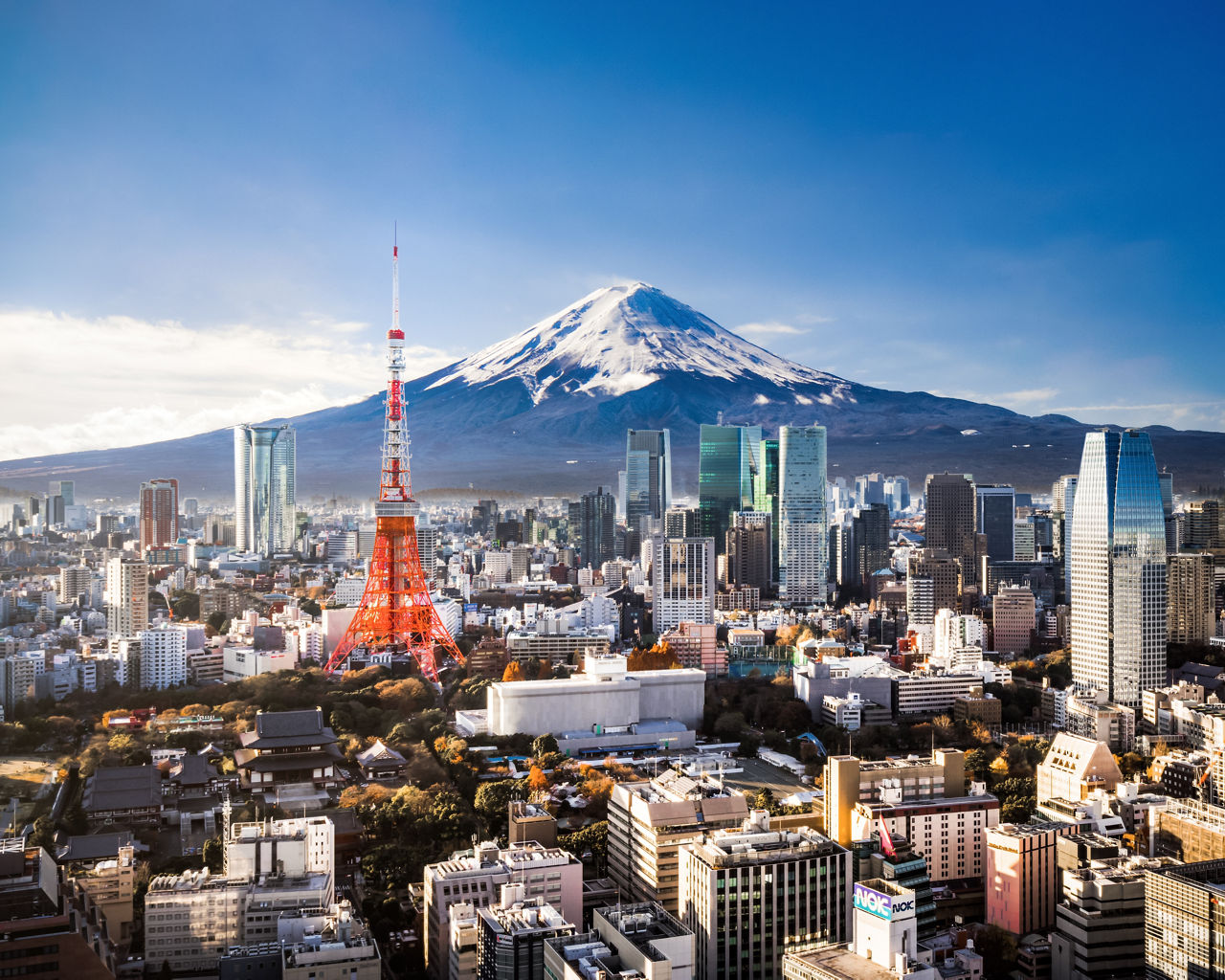
Yokohama and Edo began life as sleepy fishing villages. That changed in the early 17th century after Tokugawa Ieyasu became Shogun. Edo became the center of political power in Japan, a position the city retained even after the restoration of Imperial rule in 1866.Contemporary Tokyo may be the most astonishing city on earth. It’s a paradoxical mix of ancient tradition and postmodern culture. The Ginza – an international shopping mecca – stands near the serene grounds of the Imperial Palace, and the hyper-speed of 21st century consumerism is mysteriously reconciled with the elegance and serenity of traditional culture. Tokyo provides the traveler with a dizzying experience.With the Meiji Restoration of 1868, Edo was renamed Tokyo, the “Eastern Capital,” to distinguish it from the old imperial capital at Kyoto, the “Western Capital.”
Day 2 – At Sea
Day 3 – Beppu, Japan
Arrives 08:30 am, departs 04:00 pm.
Ominous steam rises from the Japanese island of Kyushu where Beppu lies in wait. But not to worry – this legendary tourist town is renowned for its healing geothermal waters and spas. Overlooking Beppu Bay to its east and protected from the west by dramatic mountain peaks, this exotic city is blanketed with misty turquoise waters and elegant Japanese foliage. Its main attraction is the “Hells of Beppu,” a collection of nine stunning onsen, or hot springs, some of which feature geysers and colorful waters in shades from white to copper to sapphire. The springs’ names, including Kamado-Jigoku (Boiling Hell) and Oniyama-Jigoku (Demon Mountain Hell), are somewhat misleading as all of the hot springs are breathtakingly beautiful rather than frightening – though your nose may cower and crinkle at the sulfurous odor they emit.
Day 3 – Scenic Cruising Kanmon Strait
Day 4 – Busan, South Korea
Arrives 08:00 am, departs 04:00 pm.
The second largest city in South Korea, Busan is your gateway to a fascinating land whose culture is a unique amalgam of old and new. Modern high-rise towers dwarf ancient Buddhist temples. The city’s bustling business district offers a stark contrast to the serene grounds of Yongdusan Park. In short, Busan is a microcosm of South Korea, a nation whose startling economic success often obscures one of Asia’s most sophisticated and venerable cultures.Busan was the scene of bitter fighting during the Korean War. The United Nations Memorial Cemetery marks the final resting place for the troops from 16 nations who gave their lives during the conflict.
Day 5 – Sakaiminato, Japan
Arrives 09:00 am, departs 06:00 pm.
Day 6 – Maizuru, Japan
Arrives 07:00 am, departs 08:00 pm.
Day 7 – Kanazawa, Japan
Arrives 09:00 am.
Day 8 – Kanazawa, Japan
Departs 06:00 pm.
Day 9 – Niigata, Japan
Arrives 08:00 am, departs 06:00 pm.
Traditionally famous for rice making and sake production, Niigata is the place for gourmet aficionados. It is also well known for the seafood caught from the Sea of Japan. With this variety of the commodity produced locally, Niigata developed from the wealth gained through shipping and trade by Kitamae-bune, which were cargo ships operated along the Sea of Japan between Hokkaido and Osaka from mid-18th century to the end of the 19th century. To the south of Niigata is the Tsubame-Sanjo area famous today for metalworking. This derives from the production of Japanese nails used for Japanese traditional architecture. To discover Japanese craftsmanship, you will have the chance to visit the Suwada Open Factory. Also nearby is the religious center of Niigata in Yahiko. The Yahiko Shrine has gathered the devotion of the locals for more than a millennium.
Day 10 – Akita, Japan
Arrives 08:00 am, departs 06:00 pm.
Day 11 – Aomori, Japan
Arrives 08:00 am, departs 10:00 pm.
The capital of the Aomori Prefecture in northern Japan, Aomori derives much of its beauty from the apple orchards and cherry blossoms that encompass its landscape and the snow-covered Hakkoda Mountains that look on from a distance. Throughout its history, the city has been stricken with misfortune time and time again – in 1910, a fire destroyed Aomori, and during World War II, the city was left in ruins following an air raid – yet it always prevails.Aomori is perhaps best known for its renowned Nebuta Festival, an elaborate yearly event in which participants illuminate giant paper representations of samurai warriors, animals, and popular cartoon characters while parading them through the streets.
Day 12 – Hakodate, Japan
Arrives 08:00 am, departs 11:00 pm.
It took Commodore Perry and American gunboat diplomacy to open Japan to the outside world after two centuries of self-imposed isolation. In 1859, the port of Hakodate became the first Japanese city fully opened to Westerners under the Treaty of Amity and Commerce. Foreigners soon flocked to Hakodate, and today visitors wandering the cobblestone streets of the city’s Motomachi District can view their Western-style frame houses. Hakodate, once a fishing port famed for its high quality fish and shellfish, quickly became Hokkaido’s largest city and one of Japan’s most important ports. The Great Hakodate Fire of 1934 dealt the city a near fatal blow – a blow from which Hakodate was slow to recover. Today the city is Hokkaido’s third largest – surpassed by Sapporo and Asahikawa – but retains its foremost position as the finest Japanese producer of sushi’s raw product: the high quality seafood caught in Hokkaido’s cold waters.It may not compare to Tokyo’s Tsukiji’s Fish Market, but at Hakodate’s four-block-long Morning Market, vendors offer a stunning array of fresh fish and shellfish prized for sushi including salmon roe, sea urchin, scallops and crab. Restaurants and food stands prepare a wide arrange of dishes including domburi topped with fresh seafood.
Day 13 – At Sea
Day 14 – At Sea
Day 15 – Tokyo, Japan
Arrives 08:00 am, departs 07:00 pm.
Contemporary Tokyo may be the most astonishing city on earth. It’s a paradoxical mix of ancient tradition and postmodern culture. The Ginza, an international shopping mecca, stands near the serene grounds of the Imperial Palace, and the hyper-speed of 21st century consumerism is mysteriously reconciled with the elegance and serenity of traditional culture. Tokyo provides the traveler with a dizzying experience.
Day 16 – At Sea
Day 17 – Ishinomaki, Japan
Arrives 08:00 am, departs 06:00 pm.
Day 18 – Miyako, Japan
Arrives 08:00 am, departs 06:00 pm.
Day 19 – Hakodate, Japan
Arrives 07:30 am, departs 05:00 pm.
It took Commodore Perry and American gunboat diplomacy to open Japan to the outside world after two centuries of self-imposed isolation. In 1859, the port of Hakodate became the first Japanese city fully opened to Westerners under the Treaty of Amity and Commerce. Foreigners soon flocked to Hakodate, and today visitors wandering the cobblestone streets of the city’s Motomachi District can view their Western-style frame houses. Hakodate, once a fishing port famed for its high quality fish and shellfish, quickly became Hokkaido’s largest city and one of Japan’s most important ports. The Great Hakodate Fire of 1934 dealt the city a near fatal blow – a blow from which Hakodate was slow to recover. Today the city is Hokkaido’s third largest – surpassed by Sapporo and Asahikawa – but retains its foremost position as the finest Japanese producer of sushi’s raw product: the high quality seafood caught in Hokkaido’s cold waters.It may not compare to Tokyo’s Tsukiji’s Fish Market, but at Hakodate’s four-block-long Morning Market, vendors offer a stunning array of fresh fish and shellfish prized for sushi including salmon roe, sea urchin, scallops and crab. Restaurants and food stands prepare a wide arrange of dishes including domburi topped with fresh seafood.
Day 20 – Kushiro, Japan
Arrives 10:00 am, departs 06:00 pm.
Day 21 – At Sea
Day 22 – Cross International Date Line
The International Date Line is an imaginary line extending from the North Pole to the South Pole through the Pacific Ocean. It serves as the 180th meridian of longitude, and is used to designate the beginning of each calendar day.As you know, each adjacent time zone on the map has an hour time difference. However, at the International Date Line, +12 hours and -12 hours meet, bringing about a 24-hour time change. When your ship crosses to the west it’s one day later; if your ship crosses to the east, you’ve gone back a day.Crossing the International Date Line has long been a rite of passage for sailors, who often must participate in a line-crossing ceremony to become part of the sacred “Order of the Golden Dragon”, an honorary naval fraternity.
Day 23 – At Sea
Day 24 – At Sea
Day 25 – At Sea
Day 26 – At Sea
Day 27 – At Sea
Day 28 – At Sea
Day 29 – Kodiak, Alaska, US
Arrives 08:00 am, departs 05:00 pm.
Day 30 – At Sea
Day 31 – Glacier Bay National Park (Scenic Cruising), Alaska
Arrives 07:00 am, departs 04:00 pm.
Princess is one of a select few cruise lines permitted to cruise the pristine waters of Glacier Bay, the highlight of our 7-day Voyage of the Glaciers cruise. Just west of Juneau, this breathtaking national park and preserve boasts some of the world’s most spectacular tidewater glaciers, such as Margerie Glacier, which often drops colossal chunks of ice into the sea. Not surprisingly, Glacier Bay National Park and its epic ice giants are part of a UNESCO World Heritage Site comprising Alaska’s magnificent park system. During your scenic cruise, friendly Park Rangers will join the ship to share their knowledge of this amazing place and host a fun Junior Ranger program for kids. They may even be able to help you identify Glacier Bay’s abundant wildlife, including humpback whales, sea otters, porpoises, harbor seals, black bears, mountain goats, bald eagles and large colonies of seabirds. Take in the awe-inspiring scenery as you enjoy an unforgettable day of sailing through this dazzling park, where you’ll glide along emerald waters and past calving icebergs, and can breathe in the crisp, fresh air to your heart’s content.
Day 32 – Sitka, Alaska
Arrives 07:00 am, departs 04:00 pm.
In 1799, the Russian explorer Alexander Baranof founded New Archangel next to the Tlingit village of Sitka.This was the beginning of permanent Russian settlement in North America. But New Archangel was destroyed three years later by the Tlingit Indians in an attempt to reclaim their ancestral home. Their brief victory ended in 1804, when Baranof returned with warships and retook Sitka in the Battle of Alaska. Sitka was now the captial of Russian America. In 1867, the Imperial Russian flag was replaced by the Stars and Stripes when the United States purchased Alaska. With the discovery of gold, and the rapid population growth that followed, Alaska’s capital was moved north to Juneau in 1906. Today, picturesque Sitka, sitting opposite snow-capped Mount Edgecumbe, is known for its fishing, its annual summer classical-music festival and, of course, its many historic visitor attractions.
Day 33 – Ketchikan, Alaska
Arrives 10:00 am, departs 08:00 pm.
Ketchikan is known as Alaska’s “First City” because it’s the first major community travelers come to as they journey north. Located on an island, Ketchikan began life as an Indian fishing camp. The name Ketchikan comes from a Tlingit phrase that means “eagle with spread-out wings,” a reference to a waterfall near town. In the early 1900s, when gold was Alaska’s claim to fame, fishing and timber industries were established in Ketchikan. The growth of these industries helped make this Inside Passage port Alaska’s fourth-largest city. Visitors to Ketchikan will be intrigued by its rich Native heritage, which includes the world’s oldest collection of totem poles at Totem Heritage Center. The Haida, Tlingit and Tsimshian are all a part of the city’s colorful history. Ketchikan, with its abundance of salmon, is also a sport-fishing paradise. Sightseers will be impressed with both the scenic town and its surroundings, especially Misty Fjords National Monument.
Day 34 – Prince Rupert, British Columbia, Canada
Arrives 08:00 am, departs 06:00 pm.
Historic Prince Rupert captivates both mind and heart with its maritime history and awe-inspiring scenery. Located near the Alaska panhandle, Prince Rupert was established in 1910 as the intersection of commerce and trade for First Nations people and continued to develop as a town when selected as the western terminus for the Grand Turk Pacific Railway. Nestled within a temperate rainforest, it experiences 220 days of rain each year, earning it the poetic nickname “The City of Rainbows.” But from within the raindrops, Prince Rupert shines with heritage charms best seen in its Kwinitsa Railway Station Museum, The Museum of Northern British Columbia and the historic North Pacific Cannery compound. Its stunning vistas captured in flight from the window of a seaplane adventure amaze travelers. Abundant wildlife can be observed on land at the Khutzeymateen Grizzly Bear Sanctuary. And seen from the deck of a wildlife cruise on the chilly waters, breeching humpback whales and soaring eagles inspire. Hike through the Butze Rainforest or the Exchamsiks River Provincial Park, then end the day with a stroll among the colorful gift shops stopping in a charming bistro to sample the freshest catch of the day.
Day 35 – Inside Passage
Day 35 – Transit the Seymour Narrows
Day 36 – Vancouver, Canada
Arrives 07:00 am.
Vancouver is one of the world’s most stunning cities, where scenic beauty meets vibrant city life. Nestled between the mountains and the sea, this dynamic destination offers a unique blend of cultures, flavors, and experiences. From the historic charm of Gastown—with its cobblestone streets, heritage architecture, and cozy cafés—to the bustling waterfront of the Port of Vancouver, the city invites exploration at every turn. Named after British explorer Captain George Vancouver, who charted the region’s coastline in 1792, the city carries a legacy of discovery and connection. As Canada’s third-largest city, Vancouver boasts a rich cultural tapestry, including the second-largest Chinatown in North America, world-class parks, and a distinctly European feel. Whether you’re strolling through Stanley Park, enjoying fresh seafood by the harbor, biking along the coastline, or exploring the city’s diverse neighborhoods, this beautiful waterfront city delivers unforgettable moments for every traveler.
Highlights
- Sail on an all-suite Seabourn ship with ocean-front accommodation
- Complimentary premium spirits, fine wines and dining in every venue
- Enriching Seabourn Conversations programme included
35-night Asia cruise from Tokyo (Yokohama), Japan to Vancouver, Canada aboard Seabourn Encore.
Calling at Beppu, Busan, Sakaiminato, Maizuru, Kanazawa, Niigata, Akita, Aomori, Hakodate, Ishinomaki, Miyako, Kushiro, Kodiak, Glacier Bay National Park, Sitka, Ketchikan, Prince Rupert, Inside Passage and Vancouver, with 12 days at sea. 20 ports of call across Japan, South Korea, the United States, Alaska and Canada.
Seabourn Encore is an all-suite Seabourn ship: every suite is ocean-front, and premium spirits, fine wines, dining in every venue and gratuities are included in the fare.
Suite categories range from Veranda Suite to Owner’s Suite.
Inclusions
- All-suite, ocean-front accommodation
- Complimentary premium spirits and fine wines
- Dining in every venue, including in-suite dining
- All gratuities
- Seabourn Conversations enrichment programme
FAQs
Seabourn Encore is an all-suite Seabourn ship: every suite is ocean-front, and premium spirits, fine wines, dining in every venue and gratuities are included in the fare.
Suite categories available on this sailing: Owner’s Suite, Penthouse Suite, Penthouse Spa Suite and Veranda Suite.
How long is this journey?
This itinerary runs for 36 days and 35 nights.
When can I travel?
Departures are currently scheduled between 08 Apr 2028 and 12 May 2028, subject to live availability.
What is generally included?
Inclusions typically cover guided touring and selected experiences, with exact details listed in the itinerary.
What style of accommodation is used?
Accommodation is pre-arranged as part of the journey, with specific properties shown in the trip details.
Provided by: SeabournFine Print
Terms and conditions apply. Click here for more details.
Enquire Now
Speak with our travel experts and get your personalised quote.