
Grand Japan Cherry Blossoms
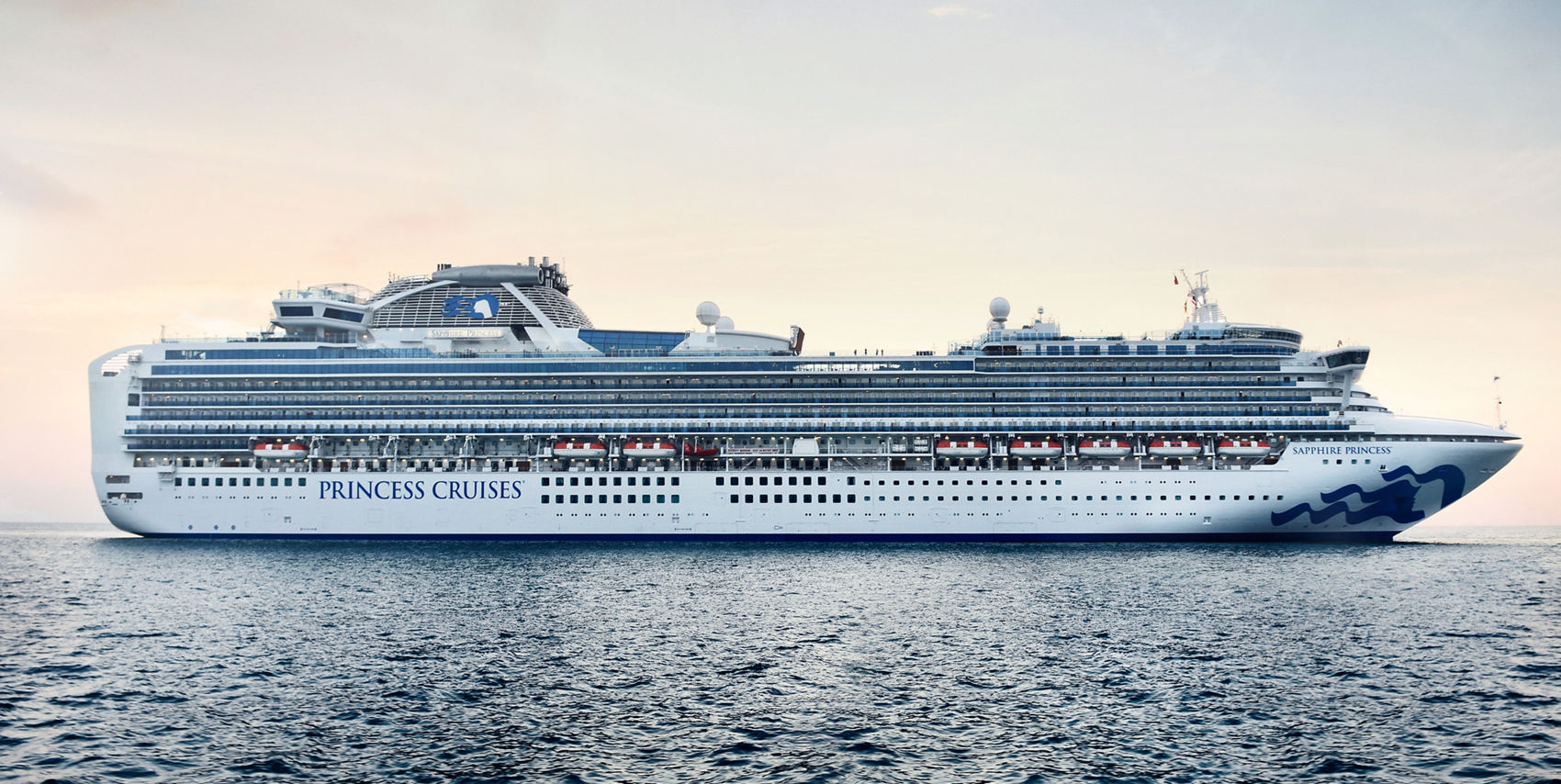
23-night Japan cruise from Tokyo, Japan to Tokyo, Japan aboard Sapphire Princess
- 06 Mar 2027 – 29 Mar 2027
from $6,555.07 pp twin share *
Additional Pricing Information
- Interior from $6,555.07 pp twin share
- Balcony from $9,765.07 pp twin share
- Mini-Suite from $11,265.07 pp twin share
- Suite from $17,155.07 pp twin share
* Prices and category availability are subject to change without notice.
Itinerary
Day 1 – Tokyo, Japan
Departs 04:00 pm.
Contemporary Tokyo may be the most astonishing city on earth. It’s a paradoxical mix of ancient tradition and postmodern culture. The Ginza, an international shopping mecca, stands near the serene grounds of the Imperial Palace, and the hyper-speed of 21st century consumerism is mysteriously reconciled with the elegance and serenity of traditional culture. Tokyo provides the traveler with a dizzying experience.
Day 2 – Toba, Japan
Arrives 07:00 am, departs 04:00 pm.
Toba, located at the northeastern end of the Shima-hanto Peninsula in Mie, flourished as the castle town of the Kuki family who ruled this region from the 16th century. It was also a landing spot for visitors on the sea route to Ise-jingu Shrine and belongs to Ise-Shima National Park.
Day 3 – Kochi, Japan
Arrives 09:00 am, departs 05:00 pm.
Kochi sits on the broad alluvial plain facing Urado Bay. This city in Shikoku takes its name from the great feudal castle that sits at its very heart. Completed in 1611, Kochi Castle was the seat of Yamauchi Kazutoyo, a noted warrior who supported Tokugawa Ieyasu in his successful quest to become Shogun. Tosa Province and Kochi Castle were Yamauchi’s reward for faithful service. There is an historical irony here: 250 years later, a Kochi native son – a former low-ranked samurai and now ronin named Sakamoto Ryoma – played a pivotal role in bringing the Tokugawa Shogunate to an end and restoring the Emperor of Japan to political prominence. The prize once awarded for faithful service had become a hotbed of support for the Meiji Restoration.Kochi is one of the wettest places in Japan – and a frequent target for cyclonic storms or typhoons. Southeast of the city, warm oceans currents washing against the Aki Mountains create a subtropical landscape of hibiscus, palm and ficus at Muroto-Anan Quasi-National Park.
Day 4 – At Sea
Day 5 – Busan, South Korea
Arrives 07:00 am, departs 04:00 pm.
The second largest city in South Korea, Busan is your gateway to a fascinating land whose culture is a unique amalgam of old and new. Modern high-rise towers dwarf ancient Buddhist temples. The city’s bustling business district offers a stark contrast to the serene grounds of Yongdusan Park. In short, Busan is a microcosm of South Korea, a nation whose startling economic success often obscures one of Asia’s most sophisticated and venerable cultures.Busan was the scene of bitter fighting during the Korean War. The United Nations Memorial Cemetery marks the final resting place for the troops from 16 nations who gave their lives during the conflict.
Day 6 – Nagasaki, Japan
Arrives 07:00 am, departs 04:00 pm.
For most travelers, Nagasaki is a symbol of the horror and the inhumanity of war. An estimated 75,000 people perished in 1945 when the city became the second target of a nuclear attack. Today, Nagasaki’s Peace Park and Atomic Bomb Museum draw visitors from around the world.But this beautiful city on Kyushu offers other sights. Often described as the San Francisco of Japan, the city occupies verdant hills surrounded by a deep-water bay. For three centuries, Nagasaki was Japan’s sole window on the world. The city is also celebrated as the setting for Puccini’s opera “Madame Butterfly.”
Day 7 – Kagoshima, Japan
Arrives 07:00 am, departs 04:00 pm.
From the 12th century to the Meiji Restoration of 1868, Kagoshima was the chief stronghold of the mighty Shimazu clan. The city lies at the top of the Satsuma Peninsula, a mountainous, geothermal wonderland of hot springs and geysers. The area is also rich in modern Japanese history: Saigo Takamori and the Satsuma samurai were leaders of the Meiji Restoration that toppled the shogun and restored the Emperor to power in 1868. In 1877, dissatisfied with the direction of the new government, Saigo led the Satsuma Rebellion, which ended in his death and the final defeat of the samurai.The symbol of Kagoshima is Sakura Jima – the volcanic island that sits just offshore. The volcano has erupted over 30 times in recorded history.
Day 8 – Matsuyama, Japan
Arrives 10:00 am, departs 07:00 pm.
Matsuyama, Japan, is a peaceful haven where you can indulge in the healing waters of hot springs, satisfy your sweet tooth with amazing Japanese confections, and discover the area’s rich literary tradition. The largest city on the island of Shikoku, Matsuyama developed around its celebrated 17th-century castle. Lined with cherry trees, this extensive fortress is a museum of historic relics from weaponry to armor, calligraphy and art. It also offers phenomenal views of the city and the Seto Inland Sea from its hilltop perch. Another city hotspot is Dogo Onsen, Japan’s oldest hot springs. Known throughout Japan as a popular setting in the late author Natsume Soseki’s famed novel, Botchan, Dogo Onsen features an elegant and inviting public bathhouse where many a visitor renews their spirit. Matsuyama is also the birthplace of Masaoka Shiki, considered the “Father of Modern Japanese Haiku Poetry,” and there are several monuments to the haiku located throughout the city. From the hospitality at the hot springs to the renowned Matsuyama tarts and botchan dango (rice dumplings in bean paste), you won’t want to leave this port!
Day 9 – Miyazaki (aburatsu), Japan
Arrives 07:00 am, departs 03:30 pm.
Boasting the second warmest temperatures in Japan, Miyazaki offers a playground of outdoor activities that take full advantage of its balmy breezes and aquamarine waters. A resort atmosphere permeates Miyazaki, fragranced by blooms from local botanical gardens. Emerald green golf courses, some of the best surfing in Japan, and a zoo with the largest number of flamingos in captivity in all of Japan add to the festive atmosphere. A Peace Tower, built with stones from throughout Asia anchors the city and Heiwadai Park and is one of the most noted landmarks. Visit Haniwa Gardens where over 400 replica haniwa (burial statues) make for wonderful photo opportunities, and see Miyazaki’s history and culture on display at The Miyazaki Prefectural Museum of Nature and History, located on the same grounds as the picturesque Miyazaki Shrine. For a change of pace, stop into the Miyazaki Science Center where an animatronics “Dr. Cosmo” welcomes you to this hands-on museum. Looking for a little adventure? Try a side trip to Aoshima, a small island just off the coast of Miyazaki City, and enjoy the charming Aoshima Shrine and over 400 species of subtropical plants. The options are endless in Miyazaki to soak up local color…or just soak up the sun!
Day 10 – Kobe (for Kyoto), Japan
Arrives 09:30 am, departs 11:00 pm.
Kobe is the fifth-largest city in Japan and is the capital city of Hyogo Prefecture on the southern side of the main island of Honshu. Its name comes from “kanbe”, an archaic title for supporters of the city’s Ikuta Shrine. With a population of about 1.5 million, the city is part of the Keihanshin (Keihanshin) metropolitan area along with Osaka and Kyoto.The earliest written records regarding the region come from the Nihon Shoki, which describes the founding of the Ikuta Shrine by Empress Jingu in AD 201. For most of its history the area was never a single political entity, even during the Tokugawa Period, when the port was controlled directly by the Tokugawa Shogunate. Kobe did not exist in its current form until its founding in 1889. Kobe was one of the cities to open for trade with the West following the end of the policy of seclusion and has since been known as a cosmopolitan port city. While the 1995 Great Hanshin Earthquake diminished much of Kobe’s prominence as a port city, it remains Japan’s fourth busiest container port. The city is the point of origin and namesake of Kobe beef as well as the site of one of Japan’s most famous hot spring resorts, Arima Onsen. Kobe is also your gateway to Kyoto, Japan’s ancient imperial capital and the nation’s cultural and spiritual center.
Day 11 – At Sea
Day 12 – Tokyo, Japan
Arrives 06:00 am, departs 04:00 pm.
Contemporary Tokyo may be the most astonishing city on earth. It’s a paradoxical mix of ancient tradition and postmodern culture. The Ginza, an international shopping mecca, stands near the serene grounds of the Imperial Palace, and the hyper-speed of 21st century consumerism is mysteriously reconciled with the elegance and serenity of traditional culture. Tokyo provides the traveler with a dizzying experience.
Day 13 – Nagoya, Japan
Arrives 09:00 am, departs 07:00 pm.
Perched on Honshu’s central coast, Nagoya is the fourth largest urban center in Japan. It is also a perfect illustration of the Japanese national story. Japan’s colorful history and love for tradition are embodied in the mighty donjons of Nagoya Castle, built by the first Tokugawa shogun. Two celebrated shrines – one Shinto, the other Buddhist – are found in the city center. Yet Nagoya also embodies Japan’s love of modernity and its thirst for technological innovation. The city is home to the very model of a major multinational corporation – Toyota. Tradition and change. Esthetics and innovation. In its own quiet manner Nagoya embodies the essence of the Japanese way. Toyota’s corporate headquarters are located just outside Nagoya in Toyota City (23 miles), while the company’s excellent museums and factories are scattered about the city and environs. Toyota began life as a manufacturer of industrial looms. Toyota Motor Corporation was spun off from its parent company in 1937.
Day 14 – Toba, Japan
Arrives 07:00 am, departs 05:00 pm.
Toba, located at the northeastern end of the Shima-hanto Peninsula in Mie, flourished as the castle town of the Kuki family who ruled this region from the 16th century. It was also a landing spot for visitors on the sea route to Ise-jingu Shrine and belongs to Ise-Shima National Park.
Day 15 – Tokushima, Japan
Arrives 08:00 am, departs 06:00 pm.
Born as a 16th century castle town whose remains now lay scattered near a park and museum, Tokushima is best known for its colorful summer dance festival, the Awa Odori. But it may be Mother Nature who garners the most attention. Surrounded by 3,280-foot-tall mountains that hint at the wonders that lie beyond, the city is the perfect gateway to the mesmerizing Naruto whirlpools, the panoramic views from atop Mt. Bizan, and the spectacular gorges and vine bridges of Iya Valley. Whether you’re entranced with the ways of the warrior, or under the spell of the extraordinary attractions, Tokushima offers exciting new experiences and unforgettable new adventures.
Day 16 – Kochi, Japan
Arrives 07:00 am, departs 05:00 pm.
Kochi sits on the broad alluvial plain facing Urado Bay. This city in Shikoku takes its name from the great feudal castle that sits at its very heart. Completed in 1611, Kochi Castle was the seat of Yamauchi Kazutoyo, a noted warrior who supported Tokugawa Ieyasu in his successful quest to become Shogun. Tosa Province and Kochi Castle were Yamauchi’s reward for faithful service. There is an historical irony here: 250 years later, a Kochi native son – a former low-ranked samurai and now ronin named Sakamoto Ryoma – played a pivotal role in bringing the Tokugawa Shogunate to an end and restoring the Emperor of Japan to political prominence. The prize once awarded for faithful service had become a hotbed of support for the Meiji Restoration.Kochi is one of the wettest places in Japan – and a frequent target for cyclonic storms or typhoons. Southeast of the city, warm oceans currents washing against the Aki Mountains create a subtropical landscape of hibiscus, palm and ficus at Muroto-Anan Quasi-National Park.
Day 17 – At Sea
Day 18 – Nagasaki, Japan
Arrives 07:00 am, departs 04:00 pm.
For most travelers, Nagasaki is a symbol of the horror and the inhumanity of war. An estimated 75,000 people perished in 1945 when the city became the second target of a nuclear attack. Today, Nagasaki’s Peace Park and Atomic Bomb Museum draw visitors from around the world.But this beautiful city on Kyushu offers other sights. Often described as the San Francisco of Japan, the city occupies verdant hills surrounded by a deep-water bay. For three centuries, Nagasaki was Japan’s sole window on the world. The city is also celebrated as the setting for Puccini’s opera “Madame Butterfly.”
Day 19 – Busan, South Korea
Arrives 07:00 am, departs 04:00 pm.
The second largest city in South Korea, Busan is your gateway to a fascinating land whose culture is a unique amalgam of old and new. Modern high-rise towers dwarf ancient Buddhist temples. The city’s bustling business district offers a stark contrast to the serene grounds of Yongdusan Park. In short, Busan is a microcosm of South Korea, a nation whose startling economic success often obscures one of Asia’s most sophisticated and venerable cultures.Busan was the scene of bitter fighting during the Korean War. The United Nations Memorial Cemetery marks the final resting place for the troops from 16 nations who gave their lives during the conflict.
Day 20
Arrives 12:30 pm, departs 02:30 pm.
Day 21 – Hiroshima, Japan
Arrives 07:00 am, departs 09:00 pm.
On August 6, 1945, human history was irrevocably altered when the American bomber Enola Gay dropped an atomic bomb on Hiroshima. The bomb was code-named “Little Boy,” but its detonation left half the city in ruins and aflame. Today, Hiroshima is a monument not only to the destructive forces harnessed by men but also to the indomitable will of the human spirit to overcome tragedy. At the heart of the city lies Peace Memorial Park and the Atomic Bomb Dome. The gutted walls of the city’s old Industry Promotion Hall and the skeletal frame that supported its copper dome, vaporized in the blast, are instantly recognizable symbols of Hiroshima.Travelers to Hiroshima will discover a more serene note at nearby Miyajima Island. One of the top-three scenic spots of Japan, the island is home to ancient Itsukushima Shrine, a designated National Treasure.
Day 22 – Beppu, Japan
Arrives 09:00 am, departs 05:00 pm.
Ominous steam rises from the Japanese island of Kyushu where Beppu lies in wait. But not to worry – this legendary tourist town is renowned for its healing geothermal waters and spas. Overlooking Beppu Bay to its east and protected from the west by dramatic mountain peaks, this exotic city is blanketed with misty turquoise waters and elegant Japanese foliage. Its main attraction is the “Hells of Beppu,” a collection of nine stunning onsen, or hot springs, some of which feature geysers and colorful waters in shades from white to copper to sapphire. The springs’ names, including Kamado-Jigoku (Boiling Hell) and Oniyama-Jigoku (Demon Mountain Hell), are somewhat misleading as all of the hot springs are breathtakingly beautiful rather than frightening – though your nose may cower and crinkle at the sulfurous odor they emit.
Day 23 – At Sea
Day 24 – Tokyo, Japan
Arrives 06:00 am.
Contemporary Tokyo may be the most astonishing city on earth. It’s a paradoxical mix of ancient tradition and postmodern culture. The Ginza, an international shopping mecca, stands near the serene grounds of the Imperial Palace, and the hyper-speed of 21st century consumerism is mysteriously reconciled with the elegance and serenity of traditional culture. Tokyo provides the traveler with a dizzying experience.
Highlights
- Sail aboard the Sapphire Princess with MedallionClass experience
- Enjoy Broadway-style entertainment and multicourse dining
- Access fitness facilities and youth/teen clubs (ages 3-17)
23-night Japan cruise from Tokyo, Japan to Tokyo, Japan aboard Sapphire Princess
Inclusions
- MedallionClass® experience
- Broadway-style entertainment
- Multicourse dining and casual venues
- Fitness facilities
- Youth and teen clubs (ages 3–17)
FAQs
How long is this journey?
This itinerary runs for 24 days and 23 nights.
When can I travel?
Departures are currently scheduled between 06 Mar 2027 and 29 Mar 2027, subject to live availability.
What is generally included?
Inclusions typically cover guided touring and selected experiences, with exact details listed in the itinerary.
Provided by: Princess CruisesFine Print
Terms and conditions apply. Click here for more details.
Enquire Now
Speak with our travel experts and get your personalised quote.